
“Trenčín as an open, free, tolerant and modern city”
“Culture is never a drain on the budget, but an enrichment”
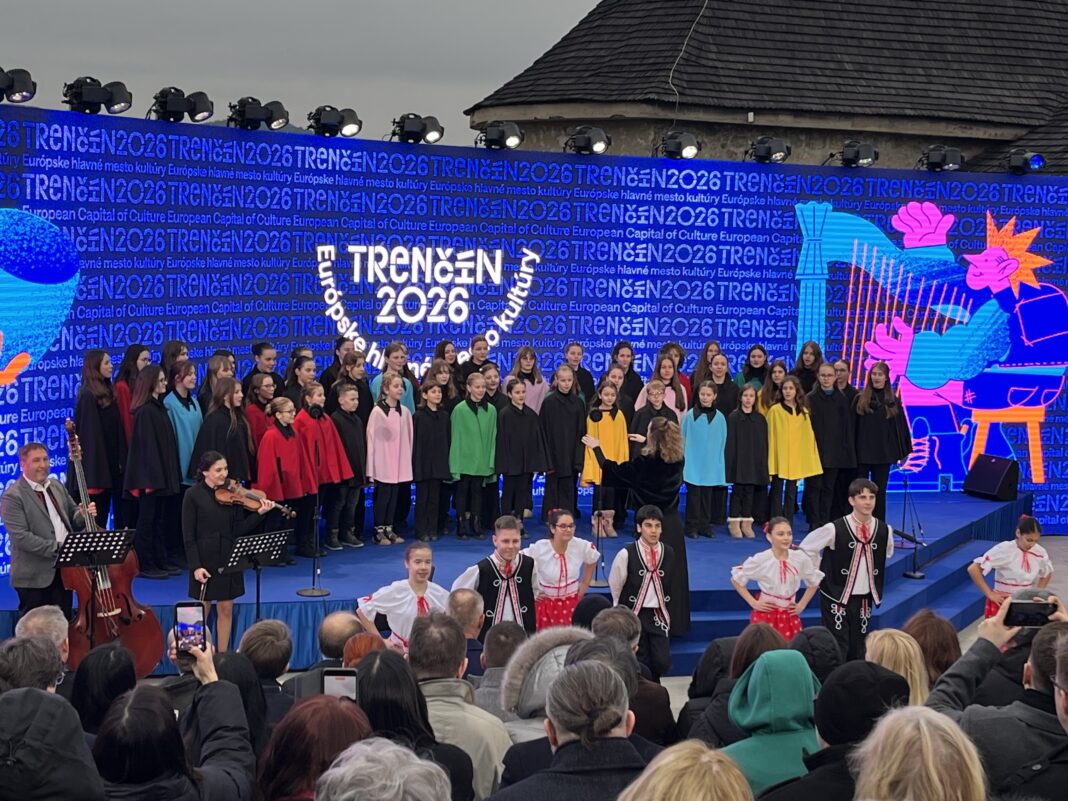
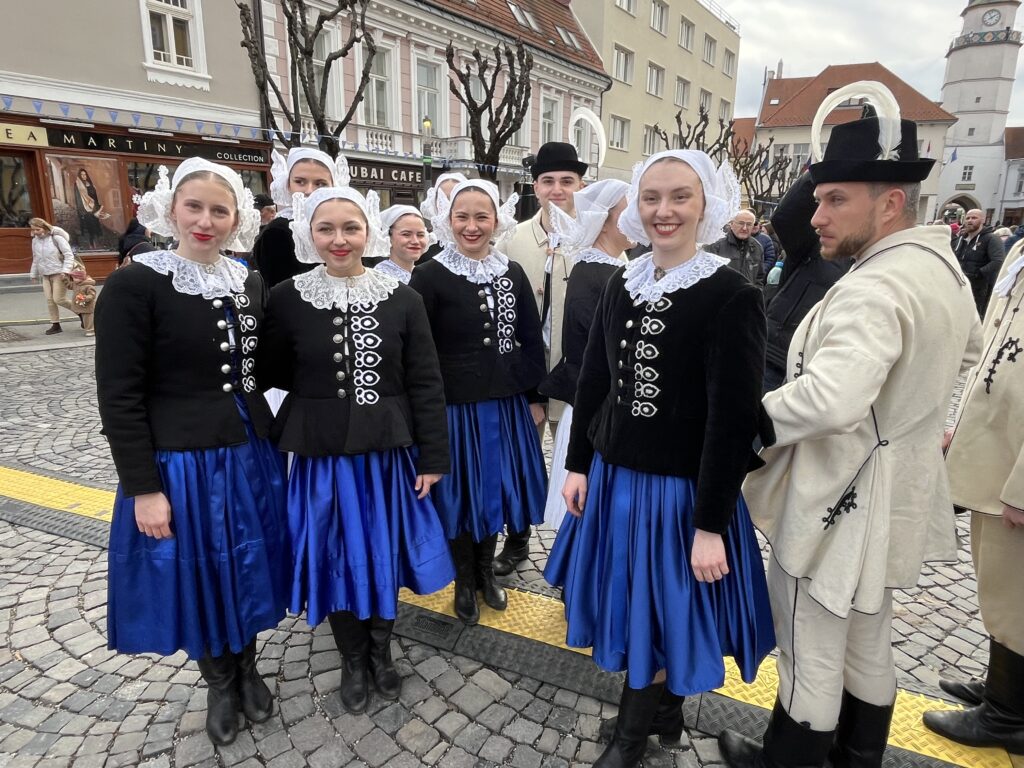
TRENCIN. This year’s “European Capital of Culture” was officially opened on 14 February in the western Slovakian city of Trenčín with the colourful street festival “Manifest Trenčín 2026”. On the packed Peace Square (Mierové námestie), the open-air stage featured mainly Slovak artists such as pop singer Jana Kirschner, folk dance groups and an army orchestra. In the old town, dozens of stalls offered arts and crafts and regional culinary specialities.
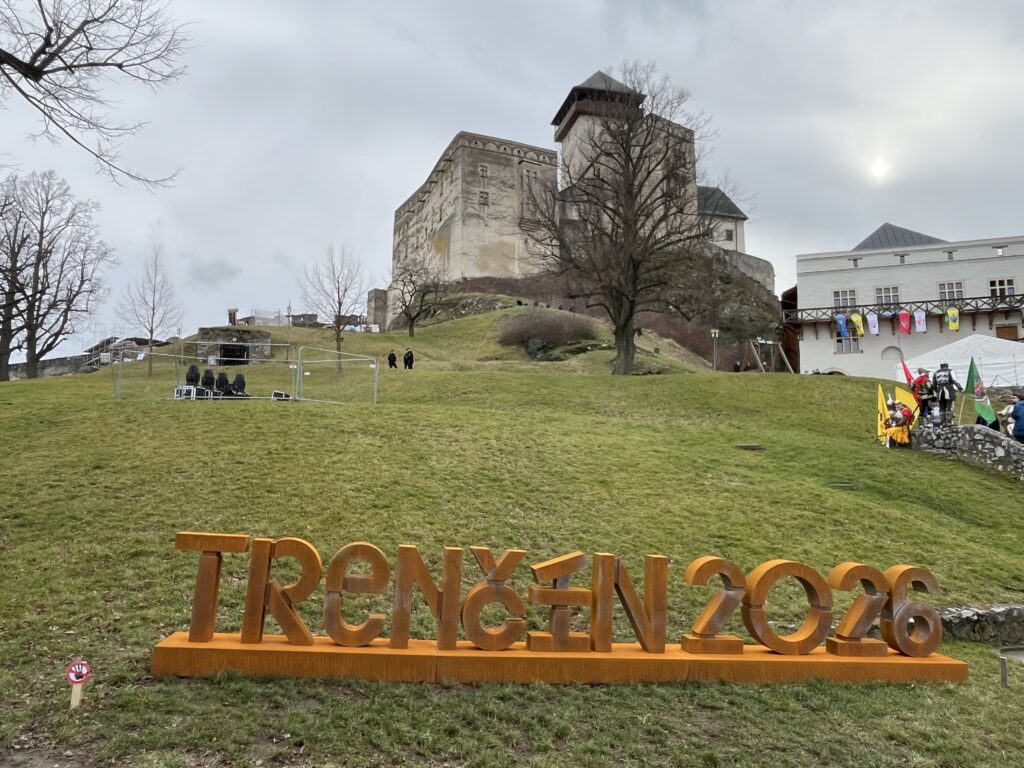
The fortress, built from the 11th century onwards on a rocky ridge in the city centre, was illuminated with a light and laser show. Light installations were on display at several locations across the city as part of the “Light up the City” project. Exhibitions remained open until late in the evening, including a retrospective of the work of the internationally renowned Slovak artist Stano Filko (1937–2015), the prominent avant-garde painter, at the Milos Alexander Bazovsky Gallery.
Top politicians absent
The opening ceremony took place at Trenčín Castle in the presence of invited guests, including the Speaker of the Slovak Parliament, Richard Raši, and a senior official from the European Commission, who was standing in for the EU Commissioner for Culture, Glenn Micallef, who was unable to attend. The absence of leading Slovak politicians was noticeable, but did not cause any discomfort among the liberal-minded local politicians and organisers. This is because Prime Minister Robert Fico and his Minister for Culture, Martina Šimkovičová, regularly attack critical artists and the media. Non-conformist cultural officials have been sacked. Consequently, the mayor of the city of 54,000 inhabitants, Richard Rybniček, declared to great applause, in a reference to Slovakia’s current authoritarian government: “We Slovaks will never allow our right to live in freedom, democracy and dignity to be taken away from us ever again.” “As European Capital of Culture, Trenčín will consolidate its position as an open, free, tolerant and modern city,” said Rybniček, an independent who has been in office since 2016, recalling his youth under the communist system behind the Iron Curtain. At that time, artists such as the writer Václav Havel – who became President of Czechoslovakia after the 1989 revolution – had courageously rebelled against the totalitarian system, thereby also expressing the desire of the Slovaks and Czechs to become part of a free Europe.
“Awakening Curiosity” as the festival’s motto
Rybniček drew attention to the plight of neighbouring Ukraine, “whose very right to exist an aggressor seeks to deny.” In keeping with the festival’s motto, “Awakening Curiosity”, the focus is on learning from one another through dialogue.
The most prominent politician present, the Speaker of the Slovak National Council, Richard Raši – who, as Mayor of Košice, led Slovakia’s first Capital of Culture in 2013 – highlighted the opportunity to showcase the richness of Slovak culture across Europe and the world. The costs involved were not merely an expense, “but an investment in our future”.
The head of the Trenčín Self-Governing Region, Jaroslav Baška, said that all residents would benefit from the Capital of Culture. “Trenčín 2026 is also important for tourism, the education sector and cooperation.” He also mentioned that in the village of Uhrovec near Trenčín, two famous Slovaks – from the 19th and 20th centuries – even lived in the same house: the politician and codifier of the Slovak written language, Ľudovít Štúr, and the former Communist Party leader of Czechoslovakia and founder of the Prague Spring, Alexander Dubček.
The Deputy Director-General for Education and Culture at the European Commission, Normunds Poppens, highlighted the growing importance of culture in EU policy. Last year, for instance, an overarching strategy for this sector was drawn up for the first time.
“We must resolutely defend our European values, including a culture that respects diversity,” said the senior EU official from Latvia. “Culture is never a drain on the budget, but rather a solution and an enrichment for our lives.”

Magnificent synagogue undergoing renovation
The budget for the Capital of Culture stands at 25 million euros, with additional EU funding for the city’s infrastructure. Parts of the old town and the castle have thus been renovated. The renovation of the Art Nouveau synagogue, inaugurated in 1913 and only partially destroyed during the Nazi era, is also continuing, with funding from Norway and Liechtenstein.
“This year, we want to offer a fresh perspective on this old city, including how artists see us,” explains Martin Mojžiš from the Capital of Culture’s management team.opean Capital of CultureThey have deliberately avoided international stars, but have invited cultural figures from other countries alongside Slovak artists. Artists from Japan, Turkey, Spain and Portugal are currently being showcased in exhibitions.
The city’s historical heritage, with its imposing castle complex, the infantry headquarters and the former textile industry, will be explored in many projects, according to Mojžiš, but always with the involvement of local initiatives. A fashion studio with a sustainable focus has just opened.
A new footbridge on an old railway-crossing over the River Váh is currently under construction, which will also house cafés, studios and shops. The ‘Altofest’ festival is scheduled for October. During the festival, artists and theatre makers will work in ten private apartments, where they can also be observed by visitors. In total, several hundred cultural projects will have been realised in the Trenčín region by the end of 2026. Alongside Trenčín, the Finnish city of Oulu is also this year’s European Capital of Culture.
By Otmar Lahodynsky
Info: www.trencin2026.eu