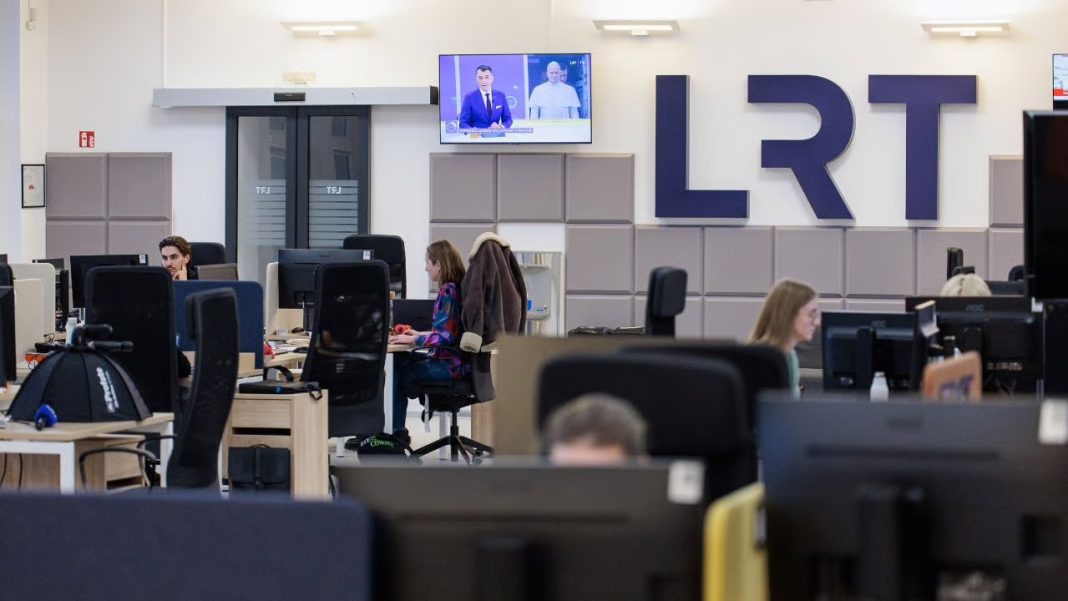

The EBU warns that Lithuanian legislative proposals to change dismissal rules for LRT’s Director General threaten public media independence. Despite public protests and minor revisions, the draft still weakens safeguards, introduces vague dismissal grounds with reduced voting thresholds, and may contradict European Media Freedom Act requirements, raising concerns over political interference and lack of transparent procedure.
On 16 December, the EBU voiced strong concern over legislative proposals in Lithuania that would alter the procedure for dismissing the Director General of Lithuanian National Radio and Television (LRT) in a letter to European Commissioner for Democracy, Michael McGrath. The letter warns that the changes currently being considered by the Seimas could seriously undermine LRT’s institutional independence and send “the wrong signal” to the Lithuanian public.
Today’s statement follows an earlier initiative on 5 December, in which we, alongside a wide group of Central and Eastern European public service media, warned that draft amendments risked weakening safeguards around the appointment and dismissal of LRT’s Director General. While minor improvements have since been introduced, we note that many of the same major risks remain in the revised draft, registered on 10 December as project Nr. XVP–1119 and approved at first reading the following day.
The updated proposal disregards the widespread public opposition expressed during major demonstrations held on 9 December. Tens of thousands of citizens, joined by the Lithuanian journalistic community, publicly urged lawmakers to withdraw the earlier amendments and to refrain from adopting any changes affecting LRT without broad consultation. Protesters called for meaningful dialogue involving journalists’ organisations, media experts, and civil society.
The decision to examine the draft under urgent parliamentary procedure has further heightened alarm. We have warned the Commissioner McGrath that such an accelerated approach prevents the completion of an impact assessment, restricts opportunities for open debate, and raises questions about the political motivations behind the initiative.
Lithuania’s current proposals further appear inconsistent with obligations set out in the European Media Freedom Act (EMFA), which require Member States to ensure transparent and non-politicized procedures for appointing and dismissing public service media leadership.
Among the most problematic changes is a plan to lower the threshold for dismissing the LRT Director General from nine to seven out of 12 votes. This could allow decisions based on narrow political interests rather than broad consensus. The introduction of secret ballots in place of open voting further diminishes transparency and accountability.
Additionally, the proposal introduces vague grounds for dismissal, such as “improper fulfilment of duties” or failure to secure approval of the annual report, without defining objective criteria. Such formulations could enable politically motivated interference and run counter to EMFA Article 5(2), which requires dismissal to be exceptional and based on clear, objective performance-related grounds.
Taken together with recently adopted Law No. XV-618, which freezes LRT funding for the next two years, these ‘reforms’ risk undermining LRT’s autonomy and contravening EMFA Article 5’s protection of stable, independent public service media financing.
The EBU calls on the European Commission to closely monitor developments and urges Lithuanian authorities to reverse the eroding safeguards for LRT. Any amendments should be developed through open, inclusive, and transparent consultation. (this statement appeared first HERE)
AEJ supports and joins this statement to the European Commission to to closely monitor developments and urges Lithuanian authorities to reverse the eroding safeguards for LRT.